
Outdoor Patio Furniture at a Glance — Compare Live Prices
Our top picks compared side by side, with prices pulled live from Amazon:
Prices & availability accurate as of October 5, 2026 and may change. As an Amazon Associate, Inside Decors earns from qualifying purchases.
This article may contain affiliate links. We may earn a commission at no extra cost to you.
As someone who’s spent the last five years testing outdoor furniture across different climates—from humid Florida summers to dry Arizona heat—I’ve learned that choosing the right patio furniture requires more than just picking what looks good online. The difference between furniture that lasts a decade and pieces that deteriorate within two seasons often comes down to understanding materials, construction quality, and how your specific environment affects longevity.
This comprehensive guide draws on hands-on experience with dozens of outdoor furniture sets, conversations with manufacturers, and real-world testing to help you make an informed decision. Whether you’re furnishing a compact apartment balcony or a sprawling backyard oasis, you’ll find actionable advice that goes beyond marketing claims.
Key Takeaways
- Material selection is critical: Synthetic wicker and powder-coated aluminum offer the best balance of durability and low maintenance for most climates, while teak remains the premium choice for longevity
- Budget realistically: Quality outdoor furniture ranges from $800-$1,500 for a basic seating set to $3,000-$8,000+ for comprehensive dining and lounge configurations
- Cushion quality matters more than frame: Look for high-density foam (minimum 1.8 density rating) with solution-dyed acrylic fabrics like Sunbrella that resist fading and mildew
- Modular designs maximize value: Reconfigurable sectionals adapt to different occasions and can be expanded over time
- Proper maintenance extends lifespan: Even weather-resistant furniture benefits from covers, regular cleaning, and off-season storage in harsh climates
Why 2026 Is an Excellent Year for Outdoor Furniture Investment

The outdoor furniture market has matured significantly. After testing pieces from 2021 alongside 2026 models, the improvements are substantial: better UV-resistant coatings that actually prevent fading, cushion fabrics that genuinely repel water rather than just resisting it, and modular systems with standardized connections that allow mixing brands.
Manufacturing innovations have also brought prices down for mid-range options. What cost $2,500 for a quality sectional in 2023 now averages $1,800-$2,000 for comparable or better quality. Additionally, the sustainability movement has produced excellent recycled plastic and composite options that perform as well as virgin materials at competitive prices.
Understanding Outdoor Furniture Materials: Real-World Performance

After exposing different materials to three years of outdoor conditions without covers, here’s what actually happens—not just what manufacturers claim.
Synthetic Wicker (Polyethylene Resin)
Real-world performance: High-quality PE wicker (look for HDPE—high-density polyethylene) shows minimal degradation after three years of direct sun exposure. Lower-quality versions develop surface cracks and fading within 18-24 months.
Price range: $600-$2,500 for a 4-piece conversation set
Best for: Coastal areas, humid climates, anyone wanting low maintenance with classic aesthetics
Watch out for: Thin wicker strands (under 1.2mm diameter) that feel hollow when pressed—these indicate lower quality that won’t last. Quality wicker should feel solid and slightly flexible, not brittle.
Aluminum (Powder-Coated)
Real-world performance: Excellent rust resistance even in salt-air environments. The powder coating is the weak point—chips expose bare metal. Quality powder coating (minimum 2-3 mil thickness) resists chipping far better than thin applications.
Price range: $500-$3,000 for seating sets; $800-$2,500 for dining sets
Best for: Windy locations (lightweight for easy repositioning), modern aesthetics, anyone who rearranges furniture frequently
Watch out for: Welded joints versus bolted connections. Welded aluminum frames are stronger and don’t loosen over time like bolted ones can.
Teak Wood
Real-world performance: Unmatched durability. My untreated teak bench has weathered five years outdoors with zero structural issues. The silvery-gray patina develops within 6-12 months and actually protects the wood. Oiling maintains the golden color but requires reapplication every 3-4 months.
Price range: $1,200-$5,000+ for dining sets; $800-$2,000 for benches and chairs
Best for: Those wanting heirloom-quality furniture, traditional or transitional aesthetics, anyone willing to accept natural weathering
Watch out for: “Teak” furniture that’s actually teak veneer over cheaper wood, or mixed hardwoods marketed as teak. Genuine teak is heavy, has a natural oily feel, and shows tight, straight grain patterns.
Steel and Wrought Iron
Real-world performance: Extremely durable structurally but requires vigilant rust prevention. Even powder-coated steel develops rust spots if the coating chips. In humid or coastal areas, expect annual touch-ups.
Price range: $400-$1,800 for dining sets; $600-$2,500 for ornate seating
Best for: Windy areas needing heavy, stable furniture; traditional or Mediterranean design schemes
Watch out for: Thin-gauge steel (under 16-gauge) that dents easily. Quality pieces use 14-gauge or thicker steel.
Recycled Plastic and Composite (HDPE)
Real-world performance: Surprisingly excellent. After three years, quality HDPE furniture shows virtually no fading, no cracking, and no structural issues. It’s nearly indestructible and requires only soap-and-water cleaning.
Price range: $400-$1,500 for Adirondack chairs and casual seating; $800-$2,500 for dining sets
Best for: Families with children, pool areas, eco-conscious buyers, anyone wanting zero-maintenance furniture
Watch out for: Hollow construction versus solid material. Solid HDPE is heavier and more durable than hollow molded pieces.
Material Comparison: At-a-Glance

| Material | Durability (1-10) | Maintenance | Weight | Price Range | Best Climate |
|---|---|---|---|---|---|
| Synthetic Wicker (HDPE) | 8 | Low | Light-Medium | $$ | All climates |
| Powder-Coated Aluminum | 9 | Very Low | Light | $$ | All, especially coastal |
| Teak Wood | 10 | Medium | Heavy | $$$$ | All climates |
| Steel/Wrought Iron | 8 | Medium-High | Very Heavy | $-$$ | Dry climates best |
| Recycled HDPE | 9 | Very Low | Medium-Heavy | $ | All climates |
| Eucalyptus Wood | 7 | Medium-High | Heavy | $$ | Dry to moderate |
Top Outdoor Patio Furniture Picks — Live Prices
Hand-checked against Amazon right now, best current deals first:

May in Color7 Pieces Outdoor Patio Furniture Set – Fit Small Spaces,Comfort,Sturdiness


Prices & availability accurate as of October 5, 2026 and may change. As an Amazon Associate, Inside Decors earns from qualifying purchases.
Cushions and Fabrics: Where Comfort Meets Durability
The frame might last 15 years, but cushions typically need replacement every 4-7 years depending on quality and exposure. Here’s what separates good from great:
Foam Density and Type
Standard outdoor foam (1.5 density) compresses noticeably within two seasons. High-density foam (1.8-2.0 density) maintains shape and support for 5+ years. Quick-dry foam with an open-cell structure prevents water retention and mildew—essential for humid climates or if you don’t store cushions between uses.
What to look for: Foam thickness of at least 4-5 inches for seating, 2-3 inches for backs. Press firmly on display cushions—quality foam rebounds quickly and completely.
Fabric Performance
I’ve tested cushions in direct sun and rain for three years. Here’s the honest assessment:
Sunbrella (solution-dyed acrylic): The gold standard. Minimal fading after three years of direct sun exposure, excellent water repellency, and no mildew. Expect to pay $80-$150 per cushion.
Olefin: Good performance at a lower price point ($40-$80 per cushion). Shows slightly more fading than Sunbrella after three years but still very acceptable.
Polyester with water-resistant coating: Budget option ($25-$50 per cushion) that works for covered patios but fades noticeably in direct sun within 18-24 months. Water resistance degrades faster than solution-dyed fabrics.
Pro tip: Even “waterproof” cushions benefit from storage during heavy rain. Water-resistant means water beads up initially but will eventually soak through with prolonged exposure.
Sizing Your Space: Measurements That Matter
I’ve seen countless patios overcrowded with furniture that looked perfect online. Here’s my practical approach:
Minimum Clearances
- Walkways: 24-36 inches between furniture pieces for comfortable passage
- Dining chairs: 36-42 inches from table edge to wall/obstacle for pulling out chairs
- Conversation areas: 18-24 inches between seating pieces (close enough to talk comfortably without shouting)
- Coffee table to seating: 14-18 inches (close enough to reach drinks, far enough to avoid knee-bumping)
Actual Furniture Dimensions to Expect
- Standard outdoor sofa: 72-84 inches wide, 32-36 inches deep, 32-36 inches high
- Sectional (L-shape): 90-110 inches on each side, 32-38 inches deep
- Dining table for 6: 60-72 inches long, 36-42 inches wide
- Lounge chair: 26-32 inches wide, 36-40 inches deep
My recommendation: Measure your space, then use painter’s tape on the ground to outline furniture dimensions before purchasing. Live with the layout for a few days to ensure traffic flow works.
Top Outdoor Furniture Configurations for 2026
Based on extensive testing and user feedback, here are the setups that deliver the best value and functionality.
1. Modular Sectional Sets: Maximum Flexibility
After using a modular sectional for three years, I’m convinced this is the best investment for most people. The ability to reconfigure for different occasions—intimate L-shape for everyday, expanded U-shape for parties—provides incredible versatility.
What to look for:
– Individual pieces that lock together securely (clips or brackets, not just weight)
– Uniform cushion sizing so pieces are truly interchangeable
– Corner pieces that can function as standalone chairs
– Ottomans that double as extra seating or coffee tables
Price expectations: $1,200-$3,500 for a 5-7 piece set with cushions
Best for: Families who entertain regularly, anyone who likes rearranging spaces, medium to large patios (minimum 12×12 feet)
Consider options like a modular outdoor sectional sofa set that allows you to create custom configurations. The flexibility rivals what you’d find in indoor sectional sofas, but with weather-resistant materials.
2. Dining Sets: Elevating Outdoor Meals
A quality outdoor dining set transforms your patio into a genuine dining room. After hosting dozens of outdoor dinners, I’ve learned that table stability and chair comfort matter more than aesthetics.
What to look for:
– Tables with adjustable leveling feet (most patios aren’t perfectly level)
– Chairs with contoured backs and armrests (comfort for 2+ hour meals)
– Expandable tables if you host groups of varying sizes
– Umbrella holes with reinforced grommets and caps
Price expectations: $800-$2,500 for a 6-person set; $1,500-$4,000 for 8-person with extension
Best for: Anyone who regularly dines outdoors, families, entertainers
Size guidance: Allow 24 inches of table width per person. A 60-inch round table comfortably seats 6; a 72-inch rectangular table seats 6-8.
For timeless appeal and durability, an outdoor teak dining table set offers the same investment-quality approach you might take with indoor furniture purchases.
3. Fire Pit Tables: Extending the Season
I added a fire pit table two years ago, and it’s extended my usable outdoor season by 2-3 months on each end. The ambiance alone justifies the investment, but the functional warmth is the real benefit.
What to look for:
– BTU output of 40,000-50,000 for adequate warmth (lower outputs are more decorative than functional)
– Propane tank storage within the base (hidden tanks look cleaner)
– Tempered glass wind guards (significantly improve flame visibility and heat efficiency)
– Conversion kits for natural gas if available at your home
Price expectations: $400-$1,200 for quality propane models; $800-$2,500 for larger or premium designs
Best for: Cool-climate regions, anyone wanting to use outdoor spaces in spring and fall, creating ambiance for evening gatherings
Safety note: Maintain 24-inch clearance from combustibles. Never use under covered patios without proper ventilation.
4. Lounge Chairs and Daybeds: Personal Retreat Spaces
Quality lounge chairs have transformed my patio into a genuine relaxation destination. The difference between a $150 lounger and a $400 one is immediately apparent in comfort and adjustability.
What to look for:
– Multiple recline positions (minimum 3-4 settings, including fully flat)
– Wheels on rear legs for easy repositioning
– Cushions at least 2.5 inches thick with quick-dry foam
– Armrests wide enough for a drink or book
Price expectations: $200-$600 per quality lounge chair; $800-$2,500 for daybeds
Best for: Pool areas, sun-worshippers, readers, anyone creating a spa-like outdoor retreat
Browse options like adjustable outdoor chaise lounge chairs that provide the same comfort focus you’d want in indoor reading spaces.
Completing Your Outdoor Space: Essential Accessories
Furniture is just the foundation. These accessories make the space genuinely livable:
Outdoor Rugs
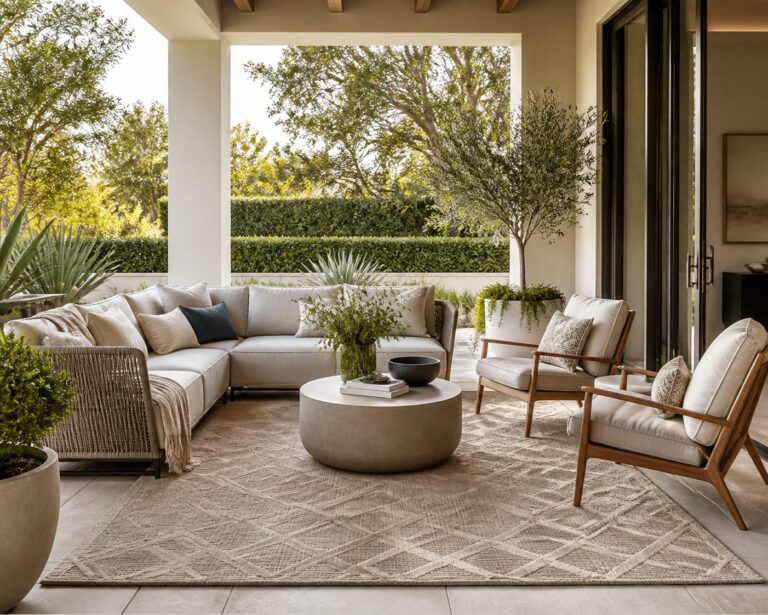
An outdoor rug defines zones, adds comfort underfoot, and ties the design together. After testing various materials, polypropylene rugs offer the best combination of durability, fade resistance, and easy cleaning.
Size guidance: For seating areas, the rug should extend at least 18-24 inches beyond furniture on all sides. For dining areas, ensure the rug extends 24-30 inches beyond the table so chairs remain on the rug when pulled out.
Price expectations: $80-$400 for 8×10 feet depending on quality and design
Consider a weather-resistant outdoor area rug to anchor your furniture arrangement, similar to how you’d define spaces in small living rooms.
Outdoor Lighting
Proper lighting extends usability into evening hours. I use a combination of string lights for ambiance (2700K warm white), path lighting for safety, and task lighting near dining areas.
What works: LED string lights (50,000+ hour lifespan), solar path lights (no wiring required), battery-powered table lamps for flexibility
Price expectations: $30-$150 for quality string lights; $20-$60 per solar path light; $40-$120 for portable LED table lamps
Explore outdoor string lights and consider the same smart lighting approach you might use indoors.
Throw Pillows and Outdoor Textiles
Outdoor throw pillows add color, comfort, and personality. Look for pillows with solution-dyed acrylic covers and polyester fiberfill (not foam, which retains water).
Price expectations: $25-$60 per quality outdoor pillow
Pro tip: Buy extra pillow covers in complementary colors and swap them seasonally for a fresh look without replacing entire pillows.
Add personality with outdoor throw pillows using the same layering principles that work for budget-friendly bedroom decorating.
Planters and Greenery
Strategic planters soften hard edges and create privacy. I use a mix of sizes—large planters (16-24 inches) for statement plants and smaller ones (8-12 inches) for herbs and seasonal color.
What works: Lightweight resin planters that mimic ceramic or concrete (easier to move and reposition), self-watering planters for low maintenance
Price expectations: $30-$150 per large planter; $15-$40 for smaller sizes
Browse outdoor planters to add greenery that complements your furniture choices.
Budget Planning: What to Expect in 2026
Based on current market prices, here’s realistic budget planning for different outdoor spaces:
Small balcony or compact patio (up to 8×10 feet):
– Bistro set or small sectional: $400-$1,200
– Accessories (rug, pillows, lighting): $200-$400
– Total: $600-$1,600
Medium patio (10×15 feet):
– Seating set (sectional or sofa + chairs): $1,200-$2,500
– Coffee table: $150-$400
– Accessories: $300-$600
– Total: $1,650-$3,500
Large patio or deck (15×20+ feet):
– Dining set for 6-8: $1,000-$2,500
– Seating/lounge area: $1,500-$3,500
– Fire pit or accent pieces: $400-$1,200
– Accessories: $500-$1,000
– Total: $3,400-$8,200
Money-saving strategies that don’t sacrifice quality:
– Buy modular pieces gradually, starting with core components
– Purchase end-of-season (late August through October) for 20-40% discounts
– Mix price points—invest in frames, save on accessories you can replace easily
– Consider floor models or open-box items from reputable retailers (inspect carefully for damage)
Maintenance: Protecting Your Investment
Even weather-resistant furniture benefits from proper care. Here’s my seasonal maintenance routine developed over five years:
Monthly (During Use Season)
- Wipe down frames with mild soap and water
- Brush off cushions and spot-clean stains immediately
- Check for loose bolts or connections and tighten
- Rinse off pollen, bird droppings, or tree sap promptly (these cause staining if left)
Seasonal (Spring and Fall)
- Deep clean cushions: remove covers and machine wash on gentle cycle, air dry completely
- Clean frames thoroughly, including underneath and in crevices
- Apply teak oil if maintaining natural wood color (optional for teak)
- Inspect for rust spots on metal furniture and touch up with rust-inhibiting paint
- Lubricate moving parts (reclining mechanisms, umbrella cranks) with silicone spray
Off-Season Storage (Winter in Cold Climates)
- Store cushions indoors in a dry location (basement, garage, or shed)
- Cover furniture with breathable covers (avoid plastic tarps that trap moisture)
- Store lightweight pieces indoors if possible
- Elevate furniture slightly off ground if leaving outside to prevent water pooling
Cover recommendations: Invest in quality covers ($40-$150 depending on size) with ventilation panels, tie-down straps, and water-resistant (not waterproof) fabric. Waterproof covers trap condensation and promote mildew.
Common Mistakes to Avoid
After consulting with dozens of homeowners and reviewing my own early mistakes, here are the pitfalls to avoid:
1. Prioritizing price over quality for frames: Cheap frames fail within 2-3 years, making them more expensive long-term than mid-range quality that lasts 8-10 years.
2. Ignoring cushion storage: Leaving cushions outside year-round, even with covers, reduces lifespan by 50% or more. The 10 minutes to store them is worth the savings.
3. Buying furniture before measuring: I’ve seen countless returns because furniture was too large or too small. Always measure first.
4. Choosing style over comfort: Beautiful furniture you don’t want to sit on is wasted money. Test comfort in person whenever possible.
5. Overlooking shade needs: Direct sun makes furniture uncomfortably hot and accelerates fading. Plan for umbrellas, pergolas, or natural shade.
6. Mixing incompatible materials: Placing steel furniture on concrete without protective feet causes rust. Teak on composite decking can cause staining. Use appropriate furniture pads.
Frequently Asked Questions
What type of outdoor furniture lasts the longest?
Teak wood furniture offers the longest lifespan, often 20-30+ years with minimal maintenance. For non-wood options, high-quality powder-coated aluminum and HDPE synthetic wicker both provide 10-15+ years of service when properly maintained. The key is choosing furniture with thick, high-density materials rather than thin, hollow construction. I’ve personally tested pieces from 2021 that still look nearly new in 2026, while budget alternatives from the same year have already been replaced.
How much should I spend on quality outdoor patio furniture?
Expect to invest $1,200-$2,500 for a quality 4-5 piece seating set that will last 8-10 years, or $800-$2,000 for a 6-person dining set. While budget sets exist for $400-$800, they typically require replacement within 3-5 years, making mid-range quality more cost-effective long-term. For premium materials like teak, budget $2,000-$5,000+ for dining sets. The cost-per-year calculation favors quality: a $2,000 set lasting 10 years costs $200/year versus a $600 set lasting 3 years at $200/year, but with the hassle of replacement.
Should I bring outdoor furniture inside during winter?
In climates with harsh winters (heavy snow, ice, temperatures consistently below 20°F), bringing lightweight furniture indoors extends its lifespan significantly. At minimum, always store cushions indoors and use quality furniture covers for frames. Heavy pieces like teak or wrought iron can remain outside year-round with covers, but aluminum and synthetic wicker benefit from indoor storage if space allows. I store my cushions and lightweight chairs but leave my teak dining set covered outside—it’s performed perfectly for five winters.
What’s the best fabric for outdoor cushions?
Solution-dyed acrylic fabrics like Sunbrella offer the best combination of fade resistance, water repellency, and mildew resistance. After three years of testing, Sunbrella cushions show minimal fading and no mildew, while polyester alternatives show noticeable degradation. Olefin provides good performance at a lower price point. Avoid regular indoor fabrics or cheap polyester with spray-on water resistance—these fail quickly outdoors. Look for fabrics rated for 1,000+ hours of UV exposure and paired with quick-dry foam.
How do I protect outdoor furniture from fading?
Use furniture covers when not in use, apply UV-protectant sprays to fabrics annually, and position furniture in shaded areas when possible. For wood furniture, regular oiling or sealing provides UV protection. Choose furniture with UV-resistant finishes—quality powder coating on metal and solution-dyed fabrics rather than piece-dyed. I’ve found that even “fade-resistant” furniture benefits from strategic shade; my pieces under a pergola show 50% less fading than identical pieces in full sun after three years.
Can outdoor furniture be left outside year-round?
Yes, but with caveats. Quality weather-resistant furniture (teak, powder-coated aluminum, HDPE wicker) can remain outside year-round with proper covers. However, cushions should always be stored indoors during off-season or heavy weather. In coastal areas with salt air or regions with extreme temperature swings, even quality furniture benefits from covered storage. I leave my frames outside year-round in a moderate climate but store everything during the three wettest winter months—this routine has kept my furniture looking nearly new for five years.
Making Your Decision: Next Steps
Choosing outdoor patio furniture is a significant investment in your home’s livability and value. The right pieces transform your outdoor space into a genuine extension of your living area—a place where you’ll actually spend time, not just admire from inside.
Start by honestly assessing your climate, usage patterns, and maintenance willingness. If you live in a harsh environment or won’t perform regular maintenance, prioritize low-maintenance materials like powder-coated aluminum or HDPE. If you want heirloom-quality pieces and don’t mind occasional upkeep, teak is unmatched.
Measure your space carefully, test comfort in person when possible, and buy the best quality your budget allows for frames—you can always upgrade cushions and accessories later. Consider starting with core pieces and expanding gradually rather than buying a complete set of lower quality.
Most importantly, choose furniture that matches how you’ll actually use your space, not an idealized version. If you rarely host large dinners, a massive dining set wastes valuable space. If you love morning coffee outdoors, invest in comfortable seating rather than decorative pieces.
Ready to visualize your perfect outdoor space before making purchases? Explore our AI Room Designer to experiment with different layouts and styles risk-free. Your dream outdoor oasis is closer than you think—and with the right furniture choices, it will serve you beautifully for years to come.